0 → 1 · Accountant self-serve onboarding
0 → 1 · Accountant self-serve onboarding
Turning accountant onboarding from support-led to self-serve
Turning accountant onboarding from support-led to self-serve
I redesigned onboarding around a simple reality: accountants arrive with different tools, hesitate over financial configuration, and rarely finish setup in one sitting. The result was an adaptive system that routes each accountant to the right path, guides high-confidence setup, and preserves progress across sessions.
I redesigned onboarding around a simple reality: accountants arrive with different tools, hesitate over financial configuration, and rarely finish setup in one sitting. The result was an adaptive system that routes each accountant to the right path, guides high-confidence setup, and preserves progress across sessions.
ROLE
ROLE
Lead product Designer
Lead product Designer
TEAM
TEAM
Product · Customer Success
Product · Customer Success
SURFACE
Web app · accountant portal
DOMAIN
B2B · Fintech · Accounting
SURFACE
SURFACE
Web app · Accountant portal
Web app · Accountant portal
DOMAIN
DOMAIN
B2B · Fintech · Accounting
B2B · Fintech · Accounting
AT A GLANCE
AT A GLANCE
The product only pays off after configuration: mappings, tax codes, integrations, exports.
The old flow was functional but silent, no clear starting point, no sense of "am I doing this right," no way to leave and return.
So accountants stalled, leaned on Customer Success, and often never reached a ready-to-use state.
I led the 0→1 redesign that turned that pile of screens into a guided, self-serve system built around how accountants actually behave: uncertain, interrupted, and cautious with financial data.
The product only pays off after configuration: mappings, tax codes, integrations, exports.
The old flow was functional but silent, no clear starting point, no sense of "am I doing this right," no way to leave and return.
So accountants stalled, leaned on Customer Success, and often never reached a ready-to-use state.
I led the 0→1 redesign that turned that pile of screens into a guided, self-serve system built around how accountants actually behave: uncertain, interrupted, and cautious with financial data.


Confidence led
Confidence led
Validation and reassurance at each financial step, not click-reduction for its own sake.
Validation and reassurance at each financial step, not click-reduction for its own sake.

Resilient by design
Resilient by design
Pause on Tuesday, resume on Friday. Progress and context never reset.
Pause on Tuesday, resume on Friday. Progress and context never reset.

Self-serve by default
Self-serve by default
Setup that completes without a support call, CS becomes the exception, not the path.
Setup that completes without a support call, CS becomes the exception, not the path.

Adapts to context
Adapts to context
One entry point routes each accountant to the right path, integration or manual
One entry point routes each accountant to the right path, integration or manual
Confidence led
Validation and reassurance at each financial step, not click-reduction for its own sake.
Resilient by design
Pause on Tuesday, resume on Friday. Progress and context never reset.
PROBLEM DISCOVERY
PROBLEM DISCOVERY
The product had effectively outsourced
Onboarding to Customer Success
The product had effectively outsourced onboarding to Customer Success
The product had effectively outsourced onboarding to Customer Success
Accountants understood why they needed to configure Alaan. The problem was knowing where to begin, what to do next, and whether their setup was correct.
I started by observing Customer Success onboarding calls. The same setup questions appeared repeatedly, showing where the product was failing to provide enough guidance.
Accountants understood why they needed to configure Alaan. The problem was knowing where to begin, what to do next, and whether their setup was correct.
I started by observing Customer Success onboarding calls. The same setup questions appeared repeatedly, showing where the product was failing to provide enough guidance.
Confidence
Confidence
Financial decisions such as mappings carried downstream consequences, so uncertainty often stopped progress.
Financial decisions such as mappings carried downstream consequences, so uncertainty often stopped progress.
Support dependency
Support dependency
Customer Success repeatedly stepped in to explain the same decisions the product should have supported.
Customer Success repeatedly stepped in to explain the same decisions the product should have supported.
Orientation
Orientation
Accountants entered the product without a clear starting point or sequence.
Accountants entered the product without a clear starting point or sequence.
Representative sentiment synthesised from onboarding interviews and Customer Success call reviews.
Representative sentiment synthesised from onboarding interviews and Customer Success call reviews.
Accountants
Accountants
For accountants, onboarding felt less like a guided setup and more like navigating an unfamiliar system alone. They understood the goal, but often didn't know where to begin, what to configure next, or whether they were doing it correctly.
For accountants, onboarding felt less like a guided setup and more like navigating an unfamiliar system alone. They understood the goal, but often didn't know where to begin, what to configure next, or whether they were doing it correctly.

Invitation
Invitation
User is invited without any clear context or guidance
User is invited without any clear context or guidance

Confusion
Confusion
Uncertain what to setup or where to begin creating uncertainty
Uncertain what to setup or where to begin creating uncertainty

Support
Support
Relies on support or internal teams, onboarding gets delayed
Relies on support or internal teams, onboarding gets delayed
Internal Customer Success Teams
Internal Customer Success Teams
Customer success teams became the bridge between users and product onboarding, repeatedly answering the same questions and manually guiding setup.
Customer success teams became the bridge between users and product onboarding, repeatedly answering the same questions and manually guiding setup.
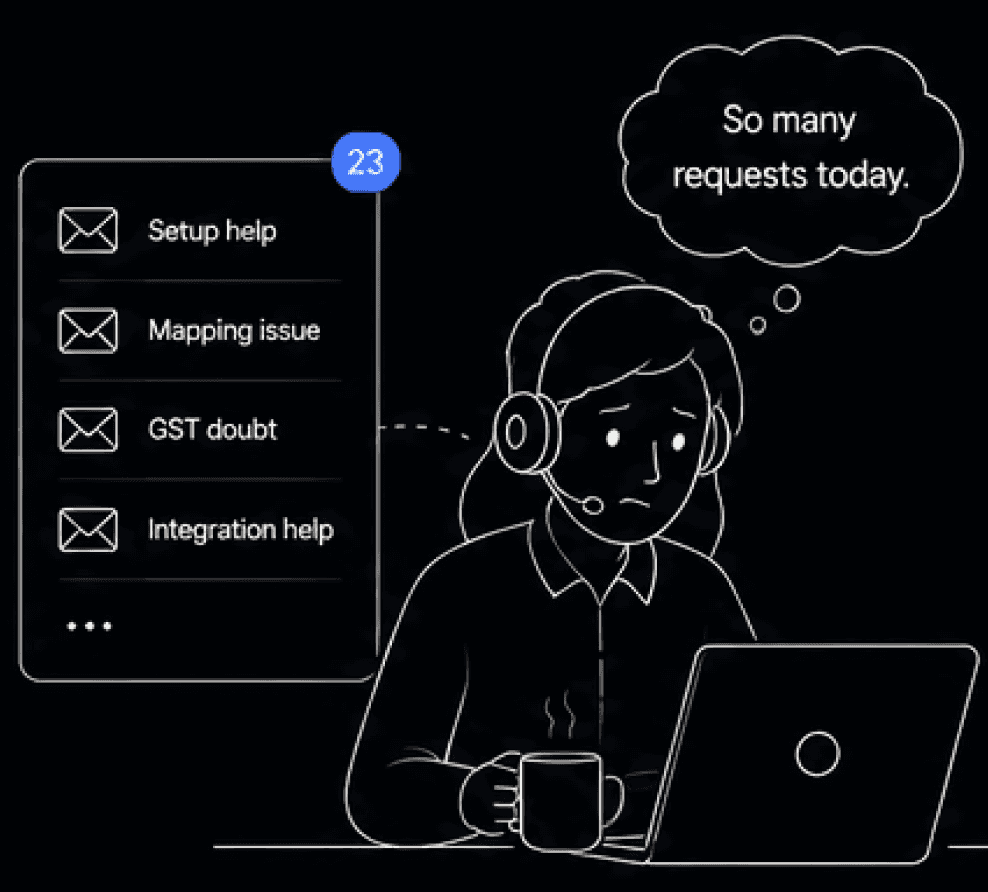
Repeated Queries
Repeated Queries
Frequent onboarding questions and setup decisions
Frequent onboarding questions and setup decisions

Manual Guidance
Manual Guidance
Spent significant time explaining and helping users progress
Spent significant time explaining and helping users progress

Delayed Completion
Delayed Completion
Back-and-forth preventing users from reaching activation quickly
Back-and-forth preventing users from reaching activation quickly
RESEARCH & VALIDATION
RESEARCH & VALIDATION
I looked for where confidence broke,
Not where the UI did.
I looked for where confidence broke, not where the UI did.
I looked for where confidence broke, not where the UI did.
Funnel data showed where accountants dropped. I needed to understand why. So I combined behavioural data with interviews, support patterns and Customer Success observations to separate interface friction from decision uncertainty.
Funnel data showed where accountants dropped. I needed to understand why. So I combined behavioural data with interviews, support patterns and Customer Success observations to separate interface friction from decision uncertainty.
01
01
Accountant interviews
Accountant interviews
Where did people hesitate?
Where did people hesitate?
02
02
CS shadowing
CS shadowing
Where did humans compensate for the product?
Where did humans compensate for the product?
03
03
Support analysis
Support analysis
Which questions repeated at scale?
Which questions repeated at scale?
04
04
Product analytics
Product analytics
Where did progress break down?
Where did progress break down?
Research Report
Research Report

Drop-off was distributed across setup, not isolated to one screen
Drop-off was distributed across setup, not isolated to one screen
The pattern suggested cumulative friction rather than a single broken step. Confidence weakened as accountants moved deeper into financial configuration.
The pattern suggested cumulative friction rather than a single broken step. Confidence weakened as accountants moved deeper into financial configuration.
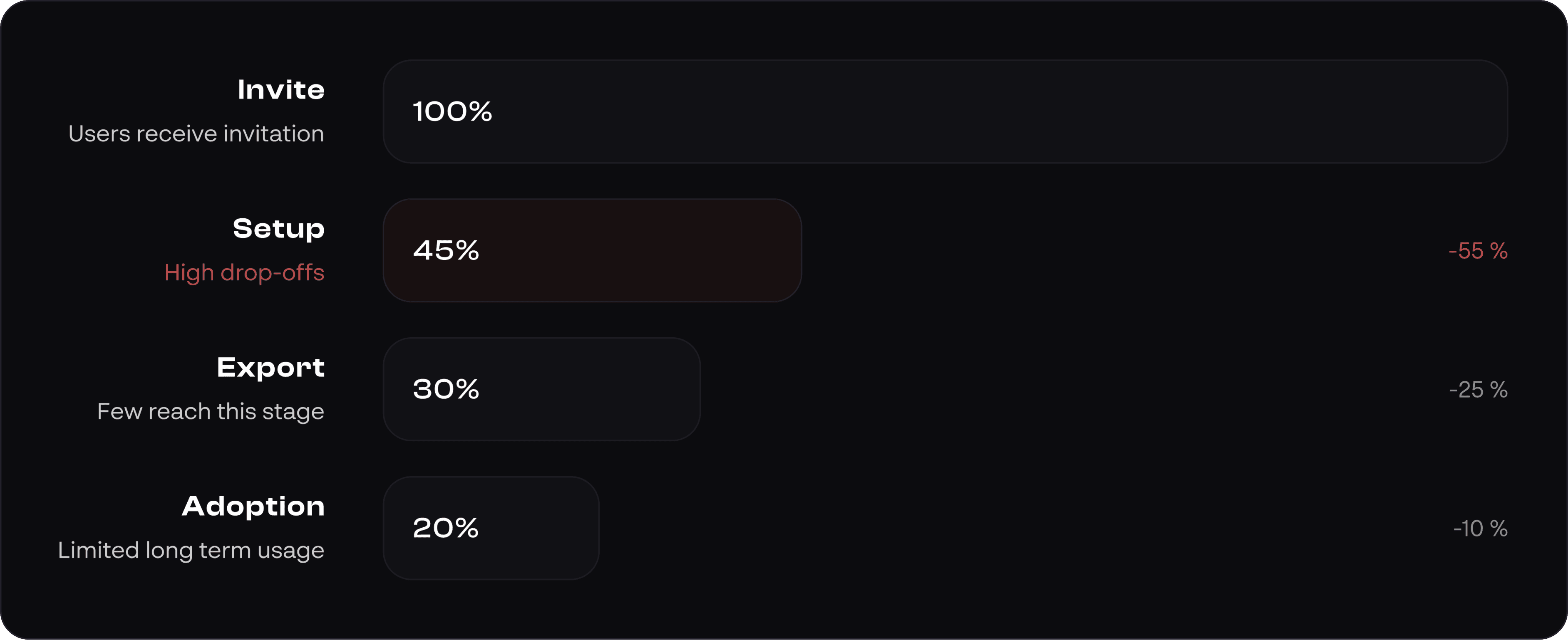
Directional representation based on observed onboarding patterns.
Directional representation based on observed onboarding patterns.
What the research actually told me
What the research actually told me
The reframing insight: people weren't failing because onboarding was long. They were failing because the system expected them to understand complex accounting setup with no adaptation to their context and no guidance through the uncertainty. Simplifying screens would have polished the wrong problem. Five patterns held across every method:
The reframing insight: people weren't failing because onboarding was long. They were failing because the system expected them to understand complex accounting setup with no adaptation to their context and no guidance through the uncertainty. Simplifying screens would have polished the wrong problem. Five patterns held across every method:
One flow can't serve every accountant - The right path depends on their accounting tools and how their books are structured.
One flow can't serve every accountant - The right path depends on their accounting tools and how their books are structured.
People needed guidance, not documentation - The product had to say what to do next, not link a help article or defer to CS.
People needed guidance, not documentation - The product had to say what to do next, not link a help article or defer to CS.
Confidence mattered more than speed - Users wanted to know a financial configuration was correct before moving on.
Confidence mattered more than speed - Users wanted to know a financial configuration was correct before moving on.
Onboarding isn't one session - People paused and returned; seamless recovery had to be a feature, not an edge case.
Onboarding isn't one session - People paused and returned; seamless recovery had to be a feature, not an edge case.
The friction was deciding what to do next, not doing it - Reducing uncertainty beat reducing clicks.
The friction was deciding what to do next, not doing it - Reducing uncertainty beat reducing clicks.
Framing the real problem
Framing the real problem
The brief asked for simpler onboarding. Research pointed to a different problem.
The brief asked for simpler onboarding. Research pointed to a different problem.
The brief
The brief
Onboarding is too long
Screens are too complex
Users need a better UI
Reduce clicks
Onboarding is too long
Screens are too complex
Users need a better UI
Reduce clicks
What I found
What I found
Confidence runs out before setup is complete
One flow cannot fit every accountant
The product doesn't explain what comes next
Progress cannot depend on one uninterrupted session
Confidence runs out before setup is complete
One flow cannot fit every accountant
The product doesn't explain what comes next
Progress cannot depend on one uninterrupted session
THE REFEAME
THE REFEAME
How might we help accountants configure Alaan independently,
with enough guidance to make confident decisions and enough flexibility to leave and return?
How might we help accountants configure Alaan independently,
with enough guidance to make confident decisions and enough flexibility to leave and return?
SOLUTIONING
SOLUTIONING
Benchmarkig
Benchmarkig
I studied how the best handle complex setup
I studied how the best handle complex setup
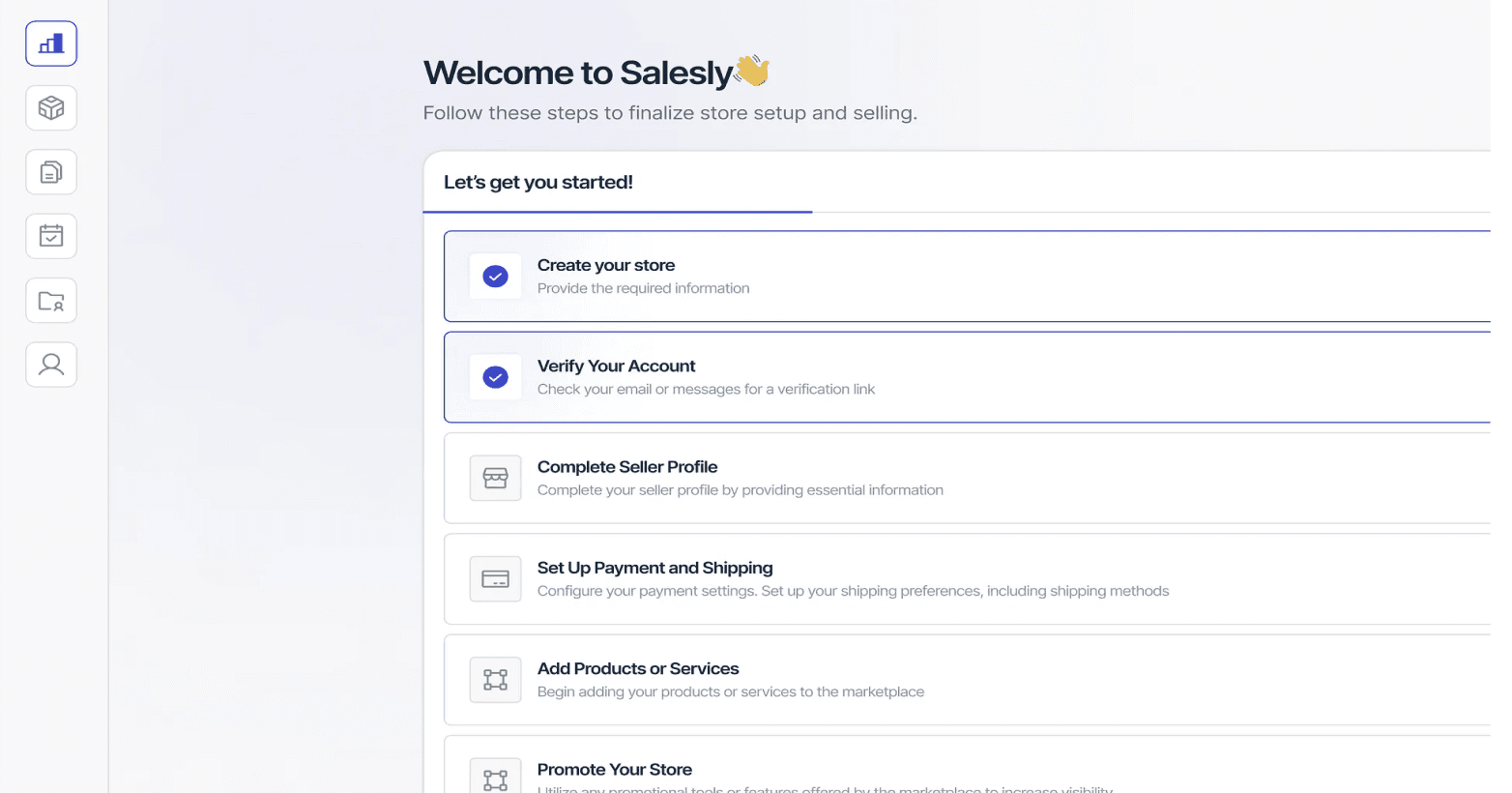
Before designing anything, I benchmarked leading spend, fintech and accounting platforms to see how they guide people through heavy configuration. The goal was to extract the product principles that consistently reduced friction and raised completion.
Before designing anything, I benchmarked leading spend, fintech and accounting platforms to see how they guide people through heavy configuration. The goal was to extract the product principles that consistently reduced friction and raised completion.


The principles that became the architecture
The principles that became the architecture
Four principles held across the field. They aren't decoration each one turns directly into an architectural move in the strategy below, so the system is evidence-derived, not invented.
Four principles held across the field. They aren't decoration each one turns directly into an architectural move in the strategy below, so the system is evidence-derived, not invented.
Adapt to user context.t - Route people into the most relevant path based on their accounting tool and setup no single flow.
Adapt to user context.t - Route people into the most relevant path based on their accounting tool and setup no single flow.
Reduce decision-making - Guide with clear next steps, recommendations and visible progress instead of a blank page.
Reduce decision-making - Guide with clear next steps, recommendations and visible progress instead of a blank page.
Build confidence continuously - Embed validation and contextual reassurance so people know a config is right.
Build confidence continuously - Embed validation and contextual reassurance so people know a config is right.
Design for interruption - Let people pause and resume without losing progress or context.
Design for interruption - Let people pause and resume without losing progress or context.
Strategy
Strategy
Ship a system that adapts, guides and remembers.
Ship a system that adapts, guides and remembers.
The old onboarding was a linear corridor that assumed one ideal user on one uninterrupted path. Real accountants don't move like that. Four architectural moves replaced it with a system.
The old onboarding was a linear corridor that assumed one ideal user on one uninterrupted path. Real accountants don't move like that. Four architectural moves replaced it with a system.

MOVE 01
MOVE 01
Unified entry + routing
Unified entry + routing
A single starting point reads the user's context and routes them into the right setup path.
A single starting point reads the user's context and routes them into the right setup path.
One rigid flow for all

MOVE 02
MOVE 02
Branching setup
Branching setup
Integration and manual paths designed around different levels of complexity, never a dead end.
Separate Integration & manual path

MOVE 03
MOVE 03
Persistent guidance layer
Persistent guidance layer
Next-step prompts, inline validation and visible progress carried across the whole journey.
Help articles & a CS call

MOVE 04
MOVE 04
Session resilience
Session resilience
Save, resume and a non-blocking assistance layer, so setup survives real interruptions.
Finish in one sitting or lose it
System architecture
System architecture
People enter setup with different contexts, so the system needs pathways, not one fixed route. A unified main flow forks into two setup tracks, with a support layer that spans everything and a recovery loop for the reality that people drop off and return.
People enter setup with different contexts, so the system needs pathways, not one fixed route. A unified main flow forks into two setup tracks, with a support layer that spans everything and a recovery loop for the reality that people drop off and return.

DESIGN & RATIONALE
DESIGN & RATIONALE
Each surface removes a reason
accountants previously needed help
Each surface removes a reason
accountants previously needed help
ENTRY POINT
ENTRY POINT
Value-first invitation
Value-first invitation
Onboarding starts before the product does. The invite was rebuilt from a generic "you've been added" into a value-driven entry what Alaan does for an accountant and why finishing setup is worth the effort so motivation exists before the first click.
Onboarding starts before the product does. The invite was rebuilt from a generic "you've been added" into a value-driven entry what Alaan does for an accountant and why finishing setup is worth the effort so motivation exists before the first click.

ACCOUNT CREATION
ACCOUNT CREATION
Guided sign-up
Guided sign-up
Sign-up was broken into structured, step-by-step inputs with clear progression and immediate feedback — turning an overwhelming form into something that feels manageable and reduces errors before they compound into support tickets.
Sign-up was broken into structured, step-by-step inputs with clear progression and immediate feedback — turning an overwhelming form into something that feels manageable and reduces errors before they compound into support tickets.

WELCOME
WELCOME
Show value before configuration begins
Show value before configuration begins
A short introduction connects setup to the accountant's workflow before asking them to configure anything.
A short introduction connects setup to the accountant's workflow before asking them to configure anything.


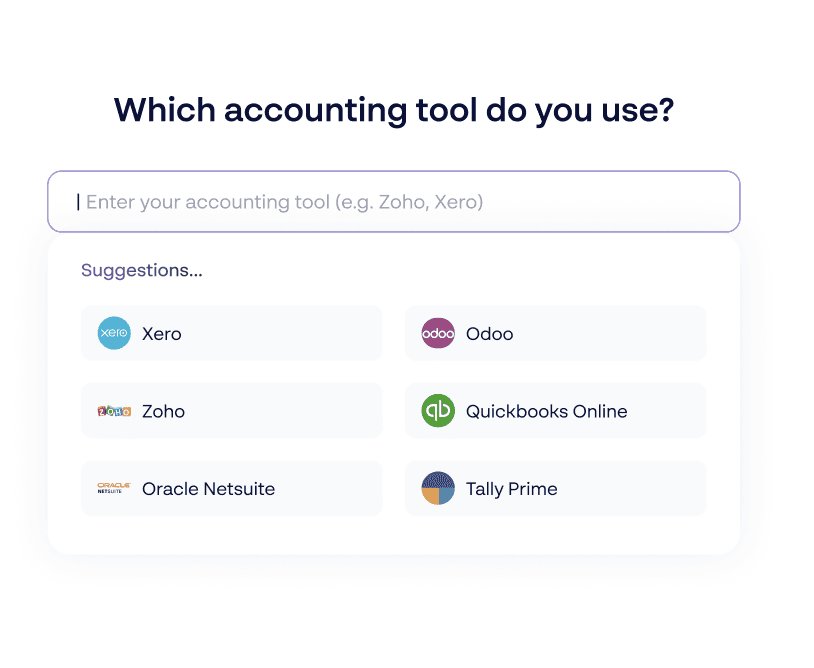
ACCOUNTING TOOL SELECTION
ACCOUNTING TOOL SELECTION
Route accountants based on the setup they actually have
Route accountants based on the setup they actually have
Selecting an accounting tool determines whether the user follows an integration or manual path.
Selecting an accounting tool determines whether the user follows an integration or manual path.

ADAPTIVE ROUTING
ADAPTIVE ROUTING
Constraints reroute the journey instead of blocking it
Constraints reroute the journey instead of blocking it
If an integration is unavailable, the system provides a viable manual route rather than a dead end.
If an integration is unavailable, the system provides a viable manual route rather than a dead end.

MANUAL SETUP
MANUAL SETUP
Structure the complex path instead of hiding its complexity
Structure the complex path instead of hiding its complexity
Accounts, mappings and tax codes are broken into manageable steps, supported by templates and clear validation.
Accounts, mappings and tax codes are broken into manageable steps, supported by templates and clear validation.

PERSISTENT ASSISTANCE
PERSISTENT ASSISTANCE
Setup can pause without disappearing
Setup can pause without disappearing
Progress remains visible inside the product, allowing accountants to return without reconstructing where they left off.
Progress remains visible inside the product, allowing accountants to return without reconstructing where they left off.

Edge cases & recovery
Edge cases & recovery
Self-serve only works if users can recover without support
Integration not supported
Integration not supported
Integration connect fails / re-auth
Integration connect fails / re-auth
Resume mid-setup on return
Invalid / conflicting tax-code mapping
Resume mid-setup on return
Invalid / conflicting tax-code mapping
Missing mandatory accounts
Missing mandatory accounts
Large chart of accounts (bulk + templates)
Large chart of accounts (bulk + templates)
Multi-session drop-off recovery
Invite expired / re-invite
Multi-session drop-off recovery
Invite expired / re-invite
Validation failure states
Validation failure states
Empty states
Empty states
The rule that shaped every one of them
A state you can't recover from is a state people abandon. So every failure path - an unsupported integration, an invalid tax-code mapping, a session that ends halfway resolves into a labelled recovery, never a dead end. That's what the recovery lane in the architecture is for: a drop-off isn't the end of onboarding, just a pause the system knows how to resume. Designing these unglamorous states, not the hero flow, is what earns the trust to run a self-serve setup at all.
A state you can't recover from is a state people abandon. So every failure path - an unsupported integration, an invalid tax-code mapping, a session that ends halfway resolves into a labelled recovery, never a dead end. That's what the recovery lane in the architecture is for: a drop-off isn't the end of onboarding, just a pause the system knows how to resume. Designing these unglamorous states, not the hero flow, is what earns the trust to run a self-serve setup at all.
Designing for confidence
Designing for confidence
The hard part wasn't the screens, it was making people trust their own setup.
The hard part wasn't the screens, it was making people trust their own setup.
A wrong mapping or tax code can affect downstream accounting and VAT. So reducing clicks wasn't enough. The interface needed to make financial decisions feel understandable, reversible and safe.
A wrong mapping or tax code can affect downstream accounting and VAT. So reducing clicks wasn't enough. The interface needed to make financial decisions feel understandable, reversible and safe.

Validate in place
Validate in place
Confirm configurations when they are made, not at the end.
Confirm configurations when they are made, not at the end.
RESTS ON
RESTS ON
Self-Determination Theory. Confirming a config is right builds competence, the “I've got this” that drives intrinsic confidence.
Self-Determination Theory. Confirming a config is right builds competence, the “I've got this” that drives intrinsic confidence.

Explain downstream impact
Explain downstream impact
Tell accountants what a setting affects before they commit.
Tell accountants what a setting affects before they commit.
RESTS ON
RESTS ON
Fogg Behaviour Model. Knowing what a setting affects raises ability and behaviour needs ability, motivation and a trigger together.
Fogg Behaviour Model. Knowing what a setting affects raises ability and behaviour needs ability, motivation and a trigger together.


Show honest progress
Show honest progress
Make completed and remaining work visible.
Make completed and remaining work visible.
RESTS ON
RESTS ON
Zeigarnik effect. We fixate on unfinished tasks; an honest progress view turns that open loop into a pull to finish never a false “almost done.”
Zeigarnik effect. We fixate on unfinished tasks; an honest progress view turns that open loop into a pull to finish never a false “almost done.”
Use defaults as guardrails
Use defaults as guardrails
Reduce blank-page decisions without removing control.
Reduce blank-page decisions without removing control.
RESTS ON
RESTS ON
Hick’s Law. Defaults cut the number of choices at each step fewer decisions, less fatigue, faster commitment.
Hick’s Law. Defaults cut the number of choices at each step fewer decisions, less fatigue, faster commitment.
Make leaving safe
Make leaving safe
Save state so users can verify something elsewhere and return.
Save state so users can verify something elsewhere and return.
RESTS ON
RESTS ON
Peak–End Rule. We remember how things end; a lossless exit means a paused setup is recalled as safe, not abandoned.
Peak–End Rule. We remember how things end; a lossless exit means a paused setup is recalled as safe, not abandoned.

Guide in context
Guide in context
Answer the next question inside the workflow rather than sending users to documentation.
Answer the next question inside the workflow rather than sending users to documentation.
RESTS ON
RESTS ON
Progressive disclosure. The next step is revealed in context, only as needed instead of front-loading a manual the user has to parse.
Progressive disclosure. The next step is revealed in context, only as needed instead of front-loading a manual the user has to parse.
HOW IT EVOLVED
Two reasonable solutions failed
because they solved the wrong problem
Two reasonable solutions failed
because they solved the wrong problem


ITERATION 01
ITERATION 01
Linear wizard
Linear wizard
Hypothesis
Hypothesis
A fixed sequence would make complex setup easier to follow.
A fixed sequence would make complex setup easier to follow.
What broke
What broke
Accountants arrived with different tools and contexts. A single sequence created irrelevant steps and couldn't handle interruption well.
Accountants arrived with different tools and contexts. A single sequence created irrelevant steps and couldn't handle interruption well.

ITERATION 02
ITERATION 02
Modular setup
Modular setup
Hypothesis
Hypothesis
Let accountants complete setup modules in any order.
Let accountants complete setup modules in any order.
What broke
What broke
Flexibility removed the thread. Users could navigate freely but had less confidence about what remained and what mattered next.
Flexibility removed the thread. Users could navigate freely but had less confidence about what remained and what mattered next.

ITERATION 03
ITERATION 03
Adaptive system
Adaptive system
What changed
What changed
One entry point routes users by context while persistent guidance, progress and recovery maintain continuity across the journey.
One entry point routes users by context while persistent guidance, progress and recovery maintain continuity across the journey.
Why it held
Why it held
It balanced structure with flexibility instead of choosing one over the other.
It balanced structure with flexibility instead of choosing one over the other.
These iterations helped move from “helping users complete onboarding” to designing a system that ensures onboarding gets completed.
These iterations helped move from “helping users complete onboarding” to designing a system that ensures onboarding gets completed.
OUTCOMES
The redesign shifted onboarding
from assisted setup to a self-serve system
The redesign shifted onboarding
from assisted setup to a self-serve system
Support-led setup
One rigid flow
Blank starting states
Single-session completion
Failures require intervention
Support-led setup
One rigid flow
Blank starting states
Single-session completion
Failures require intervention
Guided self-serve setup
Paths adapt to context
Clear next steps and validation
Progress persists across sessions
Failures include recovery
Guided self-serve setup
Paths adapt to context
Clear next steps and validation
Progress persists across sessions
Failures include recovery

–44%
–44%
onboarding support tickets
onboarding support tickets
Reduced support dependency
Reduced support dependency
Fewer onboarding queries as accountants completed setup independently.
45 → 79%
45 → 79%
activation reached, without CS
activation reached, without CS
Improved activation
Improved activation
More accountants reached a fully configured, ready-to-use state without CS intervention.
–38%
–38%
median time-to-configure
median time-to-configure
Faster setup completion
Faster setup completion
Structured, session-resilient flows cut time-to-configure across integration and manual paths.
3.2 → 4.4
3.2 → 4.4
post-setup confidence, out of 5
post-setup confidence, out of 5
Increased user confidence
Increased user confidence
Accountants felt surer completing setup and validating financial data unaided.
On these figures: modeled / directional ~ projected from onboarding benchmarks and the drop-off funnel, not post-launch measurements.
On these figures: modeled / directional ~ projected from onboarding benchmarks and the drop-off funnel, not post-launch measurements.
Target user experience
Target user experience
An accountant can begin independently, step away when needed,
and return without losing progress or context.
An accountant can begin independently, step away when needed,
and return without losing progress or context.
REFLECTION
I stopped treating onboarding as a flow
and started treating it as a system
I stopped treating onboarding as a flow
and started treating it as a system
The biggest shift in this project was recognising that the happy path wasn't the real design problem.
Accountants arrive with different tools, interrupt setup to do real work, and need confidence before committing financial configuration.
Designing around those behaviours changed the goal from making onboarding shorter to making independent completion possible.
The biggest shift in this project was recognising that the happy path wasn't the real design problem.
Accountants arrive with different tools, interrupt setup to do real work, and need confidence before committing financial configuration.
Designing around those behaviours changed the goal from making onboarding shorter to making independent completion possible.
That's a wrap. Thank you
OTHER CASE STUDIES
SELF SERVE
ACCOUNTANT

ONBOARDING


GET IN TOUCH
SELF SERVE
ACCOUNTANT
ONBOARDING